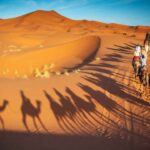
Dakhla lies in the far south of Morocco, on a narrow peninsula that runs into the Atlantic Ocean. The city faces a long, calm lagoon on one side and the open ocean and dunes on the other, which makes it one of the best places in Morocco for kitesurfing and quiet beach escapes.
The wider region of the Sahara has a complex history, but today Dakhla is a peaceful city that welcomes visitors. On this page, we focus only on travel: how to get there, what to do, and how to enjoy your stay in a safe and responsible way.
As a local travel agency in Morocco, we can arrange private tours, transfers, and activities in and around Dakhla, or include it at the end of a longer Morocco itinerary.
Where is Dakhla in Morocco?

Dakhla is about 1,400 km south of Marrakech and roughly 400 km north of the Mauritanian border. The city has around 100,000 residents and sits on a long peninsula that shelters a large lagoon.
This lagoon is famous for steady wind, flat water, and wide sandy shores, which is why many international and Moroccan kitesurfers choose Dakhla over other coastal towns. Because the area was under Spanish rule for many years, you will also notice a mix of Moroccan and Spanish influences, and some people have close links with the Canary Islands.
The climate is mild all year. Days are usually sunny but not too hot thanks to the ocean breeze. The main thing to keep in mind is the wind, which can be strong, especially in winter and spring.
Is Dakhla safe to visit?

For most travelers, Dakhla feels calmer and more relaxed than big cities such as Marrakech or Casablanca. Street harassment is very low compared with other parts of the country, and visitors often comment on how friendly and respectful locals are.
A few safety notes:
- Most tourists stay either in the city or in kite-surf camps and resorts along the lagoon. These areas are safe and used to visitors.
- Inland areas controlled by different authorities or close to the border are not recommended for independent travel. If you want to explore farther, always go with a licensed local guide or driver.
- Off-road driving without a guide is not advised, as some areas are remote, unmarked, and may still contain mines.
If you follow normal travel precautions and book activities with trusted partners, Dakhla is a very comfortable place to visit.
How to get to Dakhla
Because of the distance, reaching Dakhla takes some planning. You can come by plane, long-distance bus, or private car as part of a road trip.
By plane
Dakhla has a small airport with domestic and limited international flights.
From Morocco:
- Royal Air Maroc operates flights from Casablanca and Agadir, with connections from other cities in the country.
- Air Arabia has seasonal flights from Marrakech to Dakhla, which are often the most convenient option for travelers coming from central Morocco.
Flights are not cheap compared to other domestic routes, but they save a lot of time compared with the road.
From abroad:
- There are seasonal flights from France, Germany, and the Canary Islands. These schedules change, so it is best to check current options when planning your trip.
The airport has one small terminal and a single runway, so arrival and departure are simple and quick.
By bus
Several companies run long-distance buses to Dakhla from major Moroccan cities, including CTM, Supratours, and SATAS.
- Tickets from Marrakech cost around 500 MAD.
- The journey is long: more than 24 hours on the road, with short stops on the way.
Buses are the most economical option, but you should be ready for a basic, tiring trip.
By car or on a private tour
Driving to Dakhla is a real Sahara road adventure. The route follows the Atlantic coast for many hours through empty landscapes and small towns.
If you choose this option:
- Plan at least two days each way with a night in Laayoune or another coastal town.
- Expect many police checkpoints; keep your passport and car papers handy.
- Avoid driving at night, as there are no street lights and camels sometimes cross the road.
Booking a private driver or a guided tour is often the most comfortable way to do this journey, especially if you want to stop at other places along the Atlantic coast.
Top things to do in Dakhla
At first, Dakhla may look quiet, but there is plenty to do if you like nature, sea sports, and local culture. Here are the main highlights we recommend to our guests.
Kitesurfing in the Dakhla lagoon

Kitesurfing is the number one reason many travelers come here. The lagoon offers flat water, consistent wind, and long sandy beaches, perfect for both beginners and advanced riders.
- There are many camps and hotels that specialize in kite surf packages, including lessons, equipment rental, and accommodation.
- You can book a full package or only the lessons. As a rough idea, a basic course may cost around 300 € for 8 hours, or about 80 € per hour for private coaching.
If you are not a kitesurfer, it is still fun to sit on the beach and watch the colorful kites over the water.
La Dune Blanche (The White Dune)
La Dune Blanche is a huge sand dune standing in the middle of the lagoon, about 30–40 km from the city. When the tide is low, you can walk around it on the sand. When the tide comes in, the dune becomes an island surrounded by shallow water.
It is a strange and beautiful landscape, great for photos, birdwatching, and a short walk. Kitesurfers sometimes use the dune as a jump point when the water is high.
Imlili desert pools
About 100 km south of Dakhla you find Imlili, one of the most unusual landscapes in the area. In the middle of a dry desert, there are more than one hundred natural saltwater pools. Small fish live in these pools, and nearby you find fresh-water wells that attract herders and animals.
The ocean is not far, so you can combine Imlili with a stop at empty beaches along the coast. Because the road is not well marked, it is best to visit Imlili with a local guide or organized excursion.
Experience Sahrawi tea
Sahrawi tea is prepared slowly and served in several small glasses, each with a slightly different taste and foam. The process can easily take an hour, with a lot of pouring from one pot to another.
If you have the chance to sit with a local family or at a desert camp, this tea ceremony is a nice way to learn more about life in the region. On our private tours, we can often arrange a tea stop with local hosts.
Visit the Dakhla souk
Dakhla’s souk is much smaller than the medina in Marrakech or Fes, but it has its own charm. Prices are often lower, and you can find items that are more specific to the Saharan culture, such as:
- Melhfa fabric (the light wraps worn by Sahrawi women)
- Local loose tea and acacia sap used to sweeten it
- El aych, a grain mix common in this region
The souk is a good place to feel daily life in the city and pick up a few special souvenirs.
Oyster farms and seafood
The lagoon around Dakhla is ideal for oyster farming thanks to its clean water. Many oysters are exported to Europe, but you can also taste them locally.
Several simple restaurants near the farms serve:
- Fresh oysters, raw or grilled
- Mixed seafood plates
- Specialities such as octopus tagine
Prices are usually very reasonable. Some places have basic facilities, so it is good to know that toilets are not always available.
Ostrich and animal farms
On the road into Dakhla you may pass small farms where ostriches are raised. These visits are short but interesting, especially if you travel with children and want a quick stop to break up the drive.
Beaches in and around Dakhla

Dakhla has many wild, sandy beaches both on the lagoon side and the ocean side. Because of the wind, it is not a classic “lie down and tan” destination. Instead, think of long walks, fresh air, and wide open views.
If you want a calmer swim, some resorts have protected areas or small natural bays where the wind and waves are softer.
Where to eat in Dakhla
If you stay in a kitesurf resort, your stay is usually all-inclusive with buffet-style meals. When you feel like a change, you can head into town for more local food.
A few examples of the type of places you can expect:
- Simple family restaurants serving Friday couscous, rfissa, b’stila or grilled meat
- Seafood spots near the oyster farms, where you can try octopus tagine or grilled fish at very fair prices
Camel meat is less common here than many people think. Camels are often more valuable alive than on a plate, so you might only see camel dishes occasionally.
Where to stay in Dakhla
Accommodation in Dakhla is spread between the city and the lagoon. Many hotels and camps are not listed on large booking platforms and may ask for bank transfer deposits.
Main options include:
- Kitesurf camps along the lagoon, with simple bungalows or tents and a very active atmosphere
- Eco-lodges and resorts that offer yoga, massage, and water sports in a more relaxed setting
- Newer all-inclusive hotels with comfortable rooms, pools, and activities
When we arrange stays for our guests, we choose partners that are known for good service, safe equipment, and honest booking conditions.
Practical tips for visiting Dakhla
- Wind: Bring a light jacket or windbreaker even in summer.
- Sun: The sun is strong even on windy days, so sunscreen, sunglasses, and a hat are important.
- Connectivity: GPS and mobile signal can be weak once you leave the main road, so do not rely only on your phone for navigation.
- Cash: Some small places and taxis accept only cash, so keep Moroccan dirhams on hand.
If you plan to rent a car, choose a vehicle with good tires and avoid driving off marked tracks. For longer excursions, a local driver is usually a better choice.
FAQ about Dakhla
Dakhla is administered by Morocco as the capital of the Dakhla-Oued Ed-Dahab region. The wider area has a political history, but for visitors it functions like any other Moroccan coastal city, with Moroccan currency, laws, and services.
Yes, especially if you love sea sports, quiet spaces, and unusual landscapes. The lagoon, La Dune Blanche, Imlili, and the long beaches make Dakhla very different from northern cities such as Marrakech or Fes. It is not a classic city-break; it is more of a nature and activity destination.
For most travelers, Dakhla feels safe and relaxed. The main tourist areas along the lagoon and in the city are calm, and local people are welcoming. As always, use normal travel sense, avoid remote inland areas without a guide, and follow local advice.
Alcohol is not widely available, but there is usually one licensed shop in town and some hotels and resorts serve drinks. If alcohol is important for you, check with your accommodation in advance.
The climate is mild all year, with strong wind most of the time. Kitesurfers often prefer autumn and spring. For a more general visit, October to April is comfortable, with warm days and cooler nights.