Morocco is full of places that look like they were made for photos. Blue streets, ancient kasbahs, desert dunes, and ocean walls all give you strong, simple backgrounds for Instagram.
This guide shows 15 of the most Instagram-worthy places in Morocco. For each place, you will see what it looks like, where it is, and when it is best for photos.
Quick list of Instagrammable places in Morocco
- Chefchaouen blue streets, Rif Mountains
- Jardin Majorelle, Marrakech
- Jemaa el Fna rooftops, Marrakech
- Traditional riads and rooftops, Marrakech and Fes
- Bahia Palace courtyards, Marrakech
- Fes tanneries, Fes el Bali
- Hassan II Mosque, Casablanca
- Ait Ben Haddou ksar, near Ouarzazate
- Todra Gorge, near Tinghir
- Dades Valley hairpin bends, between Boumalne Dades and Msemrir
- Erg Chebbi sand dunes, Merzouga
- Sahara desert camp at night, Merzouga or Erg Chigaga
- Agafay desert, near Marrakech
- Essaouira port and ramparts, Atlantic coast
- Legzira Beach cliffs, near Sidi Ifni
You will cross many of these spots on a normal route that includes Marrakech, Fes, the desert, and the coast.
1. Chefchaouen blue streets, Rif Mountains
Chefchaouen is one of the most famous Instagram places in Morocco. The houses and steps in the old medina are painted in blue and white, with bright doors, flower pots, and cats in the shade. Almost every corner is a photo spot.
The best time for soft light is morning or late afternoon, when the sun does not hit the walls too hard. Midday can be very bright in summer. Try some photos in the busier streets near the main square, then walk into smaller alleys for quiet blue staircases.
Chefchaouen is in the Rif Mountains in northern Morocco, usually reached by road from Tangier, Tetouan, or Fes.
Read our guide to the blue city of Chefchaouen in northern Morocco for more tips and photos.
2. Jardin Majorelle, Marrakech
Jardin Majorelle in Marrakech is one of the most colourful gardens in Morocco. You see deep blue walls, yellow pots, cactus plants, and bamboo paths. The famous Majorelle blue colour makes a strong background for portraits.
Come early in the morning if you want fewer people in your photos. The small bridges, the blue house, and the cactus area are popular spots. Tickets are bought in advance online or at the entrance if there is space.
The garden is in the modern part of Marrakech, a short taxi or car ride from the medina.
3. Jemaa el Fna rooftops, Marrakech
Jemaa el Fna Square is already a landmark, but for Instagram, the best angle is from above. On the rooftops around the square, you can take photos of food stalls, smoke from grills, the crowd, and the Koutoubia minaret in the background.
Sunset is the best time. The sky turns orange, the lights come on, and the square fills with people. Choose a café with a terrace, order a drink, and wait for the light to change.
Most Marrakech riads are within walking distance of Jemaa el Fna, so it is easy to visit at the end of the day.
Read our full guide to Jemaa el Fna Square in Marrakech for tips, photos, and what to expect at night.
4. Traditional riads and rooftops, Marrakech and Fes
Riad courtyards and rooftops are some of the most photogenic places in Morocco. Many have tiled floors, carved doors, plants, and a small pool or fountain. On the roof, you often see palm trees and minarets.
Choose a riad with a central courtyard and rooftop terrace. Good photo spots are the balcony looking down into the courtyard, the pool edge, and any archways with tiles. On the rooftop, sunrise and sunset are the best times to capture the city and the sky.
You will find beautiful riads in Marrakech medina, Fes el Bali, and even in smaller towns like Chefchaouen and Essaouira.
5. Bahia Palace courtyards, Marrakech
The Bahia Palace has some of the most elegant details in Marrakech. Its courtyards mix white walls, green roofs, painted wooden ceilings, and patterned tiles.
For photos, look for doorways that frame the courtyard, reflections in the marble floor after rain, and close-ups of doors and ceilings. Try to visit early in the morning to avoid large tour groups and get cleaner shots.
The palace is in the southern part of Marrakech medina, not far from Jemaa el Fna.
6. Fes tanneries, Fes el Bali
The tanneries of Fes are famous for their round dye pits filled with colours. From the terraces above, you can see workers treating leather in pools of red, yellow, brown, and white.
For Instagram photos, step onto one of the leather shop balconies that overlook the main Chouara tannery. Late morning is usually good, when there is enough light but not too much shadow in the pits. The smell can be strong, so many shops give you mint leaves to hold near your nose.
Fes el Bali is the old medina of Fes and is a key stop on many routes in northern and eastern Morocco.
Read more in our guide to Fes el Bali old medina in Fes.
7. Hassan II Mosque, Casablanca
Hassan II Mosque gives you strong lines and ocean views in the same place. From the outside, you can photograph the tall minaret, the arcades, and the Atlantic waves hitting the platform.
At sunset, the light is warm, and people walk along the seafront, which adds life to your pictures. If you join a guided tour inside, you can also capture the columns and carved ceiling of the main prayer hall.
The mosque is on the coast of Casablanca, about 45 minutes from the airport by car.
Read more about Hassan II Mosque in Casablanca.
8. Ait Ben Haddou ksar, near Ouarzazate
Ait Ben Haddou is a mudbrick village on a hill, with terraced houses and towers above a small river. It looks like a film scene, and in fact, many films were shot here.
The classic Instagram angle is from across the river, where you see the full ksar rising above the palm trees. Another good spot is from the very top of the hill, looking over the valley and the High Atlas Mountains.
Ait Ben Haddou is about four hours from Marrakech over the Tizi n’Tichka pass and around half an hour from Ouarzazate. Many Sahara tours stop here for photos.
Read our full guide to Ait Ben Haddou kasbah in Morocco to learn more about the fortified ksar and how to visit it.
9. Todra Gorge, near Tinghir
Todra Gorge is a narrow canyon with high rock walls and a small river at the bottom. The scale makes it very photogenic.
The best images come from the widest part of the gorge, where the walls close in around the road and the stream. You can stand in the middle of the canyon with cliffs on both sides, or capture people walking along the water to show how tall the rocks are.
Todra sits near Tinghir, on the road between Ouarzazate and Merzouga.
Read our guide to Todra Gorges in Morocco for more photos, walking tips and practical information.
10. Dades Valley hairpin bends
The Dades Valley has a famous viewpoint above a set of sharp hairpin bends in the road. From here, you see the zig-zag road climbing the red cliffs with the green valley below.
Sunset brings warm colours to the rock, but morning is also good when shadows are softer. Another nearby spot is the “monkey fingers” rocks, where erosion has shaped the cliffs into rounded forms.
This area lies between Boumalne Dades and Msemrir and is often included on routes from Marrakech to Merzouga.
11. Erg Chebbi sand dunes, Merzouga
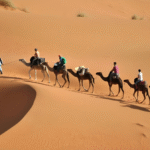
Erg Chebbi near Merzouga is one of the top Instagram locations in Morocco. The dunes change colour through the day, from soft beige to deep orange at sunset.
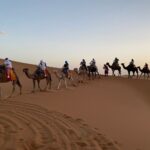
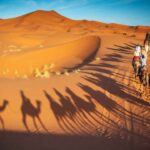
For photos, sunset and sunrise are the best. You can take pictures of camels walking along the ridge, people standing on the crest of a dune with a long shadow, and patterns of wind on the sand. Try some close-ups of footprints and some wide shots that show how big the dunes are.
Merzouga is in south-east Morocco near the Algerian border and is reached by road from Marrakech, Fes, or Ouarzazate.
Read our full guide to the Erg Chebbi sand dunes in Merzouga desert in Morocco for more photos and tips.
12. Sahara desert camp at night
A night in a Sahara desert camp gives you very special photos, especially after dark. With almost no city light, the sky can be full of stars.
Set your camera or phone on a tripod or a steady surface and try long exposure shots of the camp lights and the Milky Way above. Even without advanced gear, you can capture the tents lit by lanterns and the fire circle where music is played.
Desert camps are usually in Erg Chebbi near Merzouga or Erg Chigaga near M’Hamid and Zagora.
13. Agafay desert, near Marrakech
If you do not have time to travel to the Sahara, the Agafay stone desert near Marrakech is a good alternative for Instagram photos. You see rolling light-coloured hills, desert camps and, on clear days, the High Atlas peaks in the background.
Sunset is the best time for photos, when the stones turn golden, and camp lights come on. Many people come for an afternoon quad ride or camel ride, then stay for dinner with views.
Agafay is about 40–60 minutes by car from Marrakech, so it works well as a half-day or evening trip.
14. Essaouira port and ramparts
Essaouira, on the Atlantic coast has white walls, blue doors, a fishing port, and stone ramparts facing the ocean. The mix of sea, seagulls, and cannons makes strong images.
The classic shot is from the Skala de la Ville ramparts looking back towards the medina and the sea. Another one is the line of blue fishing boats in the port. Late afternoon light and sunset are very good here, especially on windy days.
Essaouira is about three hours’ drive from Marrakech and fits well at the end of a desert and city trip.
Read our Essaouira travel guide for the best things to do, where to walk in the medina and how to plan your stay on the Atlantic coast.
15. Legzira Beach cliffs, near Sidi Ifni
Legzira Beach in the south of Morocco is known for its red cliffs and natural arches carved by the ocean. Even though the largest arch collapsed a few years ago, the coastline still offers dramatic shapes and colours.
At low tide, you can walk along the sand below the cliffs and take photos from different angles. Sunset is particularly beautiful when the rocks glow red, and the sky reflects on the wet sand.
Legzira is between Mirleft and Sidi Ifni, south of Agadir, and is popular with people who enjoy coastal road trips and quieter beaches.
How to visit these Instagram places in Morocco
Many of these photo spots can be visited in one trip. Our agency organizes private tours in Morocco that include Marrakech, Fes, Chefchaouen, the Sahara desert near Merzouga, Ait Ben Haddou, and Essaouira. If you want a custom route focused on Instagram-worthy places, we can plan a tour that matches your dates, budget, and style.
FAQ about Instagram-worthy places in Morocco
Many people would say Chefchaouen because of its blue streets. Others choose the Erg Chebbi dunes near Merzouga or the rooftops around Jemaa el Fna in Marrakech. The best place for you depends on whether you prefer cities, mountains, ocean or the desert.
Spring (March to May) and autumn (September to early November) are usually best. The light is softer, days are not too hot and skies are often clear. Summer can be very bright and hot in Marrakech and the desert, but good for coastal towns like Essaouira. Winter gives nice low light but you may have rain on the Atlantic and cold nights in the mountains and Sahara.
In most places, sunrise and the last two hours before sunset give the best results. Midday light is strong and creates hard shadows, especially on white or blue walls and in the desert. In Jemaa el Fna and desert camps, night photos with lights, food stalls and stars also work very well.
You should always be respectful. Many people do not like close-up photos without being asked. If you want a picture of a person, it is better to ask first with a smile and a simple question. In markets, snake charmers, water sellers and some performers charge a small tip if you take their photo.
For good photos and comfort, choose clothes that are both modest and colourful. Long dresses, light trousers, shirts and scarves in warm or soft colours look great against blue walls, red rock and golden sand. In religious or very traditional areas, cover shoulders and at least to the knees.
With these Instagram-worthy places in Morocco, you can plan a route that gives you both strong images and real experiences, from blue mountain towns to wide Sahara skies.