The Colors of Morocco are part of what makes the country so unique. Everywhere you go, colors shape the way people live and how travelers experience the country. Morocco is often called a land of light and color, where every shade carries meaning.
The red walls of Marrakech, the blue-painted alleys of Chefchaouen, and the golden dunes of the Sahara are more than just scenery. They are symbols of history, faith, and daily life. You also see these colors in mosques, palaces, souks, and traditional clothing.
Each color tells a story. Red shows strength and protection. Blue represents peace and spirituality. White stands for purity. Green reflects Islam and nature. Golden and yellow tones remind us of the desert sun and hospitality.
Together, the colors of Morocco create a rich palette that connects people to the land and its traditions. Visiting Morocco is not only about places, but about experiencing these colors that bring history, culture, and beauty to life.
Why Morocco is Known as a Country of Colors
Colors in Morocco are never random. Each one has a purpose and a meaning.
They are part of architecture, from city walls to mosque tiles. They appear in traditional clothing, carpets, and handmade crafts.
Markets are filled with colorful spices, lanterns, and textiles. Even Moroccan food reflects this palette with saffron yellow, paprika red, and fresh green herbs.
Every corner of the country celebrates color. Together, these shades express life, faith, and tradition in a way that makes Morocco truly unforgettable.
Symbolism of Colors in Moroccan Culture
In Morocco, every color has a meaning. These shades are more than decoration — they reflect history, beliefs, and daily life.
Red stands for strength and protection. It is often linked to power and energy. Blue represents peace and spirituality. It brings a sense of calm to cities and villages. White is the color of purity and is used in many sacred places. Green is the color of Islam, nature, and paradise. Golden and yellow tones reflect the desert sun, warmth, and hospitality.
| Color | Meaning in Moroccan Culture | Where to See It Best |
|---|---|---|
| Red | Strength, power, protection | Marrakech medina, kasbah walls |
| Blue | Peace, spirituality, sky & heaven | Chefchaouen blue alleys |
| White | Purity, spirituality, sacred spaces | Mosques, Tetouan, Casablanca |
| Green | Nature, paradise, Islam | Majorelle Garden, oases, mosque tiles |
| Gold/Yellow | Warmth, hospitality, wealth | Sahara dunes, lamps, jewelry |
The Red of Marrakech

Marrakech is famously called the Red City. The nickname comes from its red clay walls and houses, which give the city a warm, earthy tone. This color has become one of the city’s most recognizable features and a symbol of its identity.
The Red Walls and Medina
The red walls of Marrakech date back to the 12th century, built under the Almoravid and Almohad dynasties. They were constructed from clay and limestone found in the nearby Haouz plain, which gave them their deep red shade.
Walking through the medina, visitors are surrounded by these red walls and narrow streets. The color is not just beautiful — it also has a purpose. The clay walls help regulate temperature, keeping homes cooler during the hot summer days. This practical design has lasted for centuries.
Sunset Hues over Jemaa el-Fna
The magic of Marrakech is best seen at sunset. As the sun sets behind the High Atlas Mountains, the walls of the medina take on a deeper red and orange glow.
In Jemaa el-Fna Square, the heart of the city, this light makes the atmosphere even more lively. Food stalls, musicians, and storytellers gather as the square fills with golden light, reflecting off the red walls. For many travelers, this moment captures the true spirit of Marrakech — colorful, vibrant, and full of energy.
The Blue of Chefchaouen

Chefchaouen, in the Rif Mountains, is one of the most colorful towns in Morocco. The walls, doors, and steps are all painted in different shades of blue, making it one of the most photographed places in the country.
History Behind the Blue Walls
The tradition of painting the town blue is centuries old. Some say it began with Jewish refugees in the 15th century, who painted their homes blue to represent the sky and heaven. Others believe the blue color keeps mosquitoes away. Whatever the origin, the blue paint became part of the town’s identity and has been preserved by locals until today.
What Blue Means to Locals and Visitors
For the people of Chefchaouen, blue is more than decoration. It symbolizes peace, spirituality, and harmony. Walking through the narrow alleys, visitors often describe a sense of calm and relaxation.
The town’s blue walls also attract artists, photographers, and travelers from around the world. The contrast between the blue houses and the surrounding green mountains makes it one of Morocco’s most unique destinations. Shops in the medina add even more color, selling woven blankets, pottery, and spices that stand out against the blue background.
The White of Imperial Cities

White is another important color in Morocco, especially in its imperial and coastal cities. It is often linked to purity, spirituality, and simplicity. Many Moroccan towns are known for their whitewashed walls that shine brightly under the sun.
White Mosques and Sacred Buildings
In cities like Casablanca, Tetouan, and Rabat, white is the dominant color of mosques and sacred buildings. The Hassan II Mosque in Casablanca, one of the largest in the world, is a striking example where white stone is combined with green tiles. The use of white reflects light and creates a sense of calm in places of worship.
Purity and Spirituality in Moroccan Architecture
White is also used in riads, houses, and medinas to give a feeling of openness and peace. In Tetouan, known as the White Dove of Morocco, almost the entire city is painted white, giving it a clean and elegant appearance. The color is practical too — it reflects the heat of the sun and keeps buildings cooler.
For Moroccans, white represents both purity and spiritual devotion. Walking through these cities, travelers can feel the connection between the architecture, the people, and the meaning of this timeless color.
The Green of Gardens and Islam
Green has a very special place in Morocco. It is the color of Islam, the dominant religion of the country, and it also represents nature, life, and renewal. Wherever you travel, green appears as a symbol of hope and growth.
Majorelle Garden and Green Oases

One of the most famous places to enjoy green in Morocco is the Majorelle Garden in Marrakech. Created by the French painter Jacques Majorelle and later restored by Yves Saint Laurent, the garden is filled with palms, bamboo, cactus, and exotic plants. The deep shades of green contrast beautifully with the bright blue walls inside the garden, making it one of the city’s highlights.
Outside the cities, green can be found in Morocco’s oases. These fertile areas stand out in the middle of dry landscapes. Palm groves in places like Skoura and the Ziz Valley provide shade, dates, and life to local communities. The green of olive trees and wheat fields in the countryside adds another layer to Morocco’s colorful landscapes.
Green as a Symbol of Life and Religion
In Islamic tradition, green is considered the color of paradise. That is why it is often used in mosques, tiles, and religious decorations across Morocco. It is also present on the Moroccan flag, alongside the red background.
For Moroccans, green is both spiritual and practical. It connects faith with nature and shows the importance of life and growth in a land where the desert is never far away.
The Gold and Yellow of the Desert
The Sahara Desert adds golden and yellow tones to Morocco’s palette. These warm colors are some of the most iconic images of the country and create unforgettable memories for travelers.
Golden Sand Dunes of Erg Chebbi

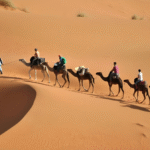
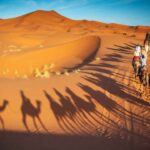
Near the town of Merzouga, the Erg Chebbi dunes rise high above the desert floor. At sunrise and sunset, the sand glows in shades of gold, orange, and yellow. The colors change with the light, making the dunes look alive and always different. Travelers often ride camels into the dunes to watch this magical show of color.
Further south, the dunes of Erg Chigaga near M’hamid offer another golden landscape. These vast sand seas stretch for kilometers and highlight the beauty and silence of the desert.
Light and Warmth in Moroccan Art and Design
The golden tones of the desert have also influenced Moroccan art and design. Brass lamps, jewelry, and carpets often include warm yellow and golden shades, symbolizing hospitality and wealth. In Moroccan culture, gold represents warmth and generosity, values that are deeply tied to desert life.
For visitors, the golden desert is not just a natural wonder but also a cultural experience. It reflects the strength of nature and the warmth of Moroccan traditions.
The Multicolor Souks and Handicrafts
Morocco’s souks, or traditional markets, are a celebration of color. Walking through them is like stepping into a living painting where every corner shines with bright shades and patterns.
Spices, Carpets, and Lanterns

In the spice stalls, you see piles of red paprika, golden turmeric, saffron threads, and green herbs. The air is filled with their strong aromas, making the markets as colorful as they are fragrant.
Carpet shops display handmade rugs with bold designs in reds, blues, and greens. Each pattern tells the story of the tribe or region where it was made. These carpets are not just useful at home but also treasured as works of art.
Lantern shops add more color with their metal frames and glass mosaics. At night, when lit, they spread warm, colorful light across the streets, creating a magical atmosphere.
Everyday Life in Colorful Markets
Souks are not only about shopping. They are places where locals and travelers meet, trade, and connect. The sounds of bargaining, the smell of food, and the sight of colorful displays make the markets full of life.
For visitors, exploring a souk is one of the best ways to experience Moroccan culture. The mix of colors and energy makes it an unforgettable part of any trip.
| Item | Typical Colors | Symbolism/Use |
|---|---|---|
| Spices | Red paprika, golden turmeric, saffron yellow | Flavor, health, tradition |
| Carpets | Reds, blues, greens, multicolor patterns | Tribal identity, home decoration |
| Lanterns | Gold frames with multicolored glass | Light, warmth, hospitality |
Seasonal Colors of Morocco
Morocco’s colors change with the seasons. Each time of year brings new shades that transform the landscape and add variety to the country’s natural beauty.
Spring Blooms and Valley Greens
In spring, Morocco comes alive with fresh greens and blossoms. Valleys like Ourika, Dades, and the Middle Atlas are filled with almond and cherry blossoms, covering the trees in pink and white. Wheat fields turn green, and flowers bloom across the countryside, bringing soft and refreshing tones.
Winter Snow in the Atlas Mountains
In winter, the colors shift. The High Atlas Mountains are covered in snow, turning peaks into brilliant shades of white and blue. This contrast between snowy mountains and the warm desert below creates some of Morocco’s most breathtaking views.
Summer and Autumn Shades
Summer brings brighter ochre tones as the sun beats down on kasbahs, mud-brick villages, and the desert. In autumn, the landscapes deepen into earthy reds and browns during the harvest season. Together, these colors reflect the rhythm of Moroccan life throughout the year.
| Season | Typical Colors | Highlights |
|---|---|---|
| Spring | Green, pink, white | Almond blossoms in Dades, lush Ourika Valley |
| Summer | Ochre, golden | Desert dunes, sunlit kasbahs |
| Autumn | Deep red, earthy brown | Harvest fields, Atlas villages |
| Winter | White, cool blue | Snowy Atlas peaks, Atlantic skies |
Experiencing Morocco Through Its Colors
The colors of Morocco are not only something to look at — they are an experience to feel and capture. Travelers often say that the mix of shades is what makes their visit truly unforgettable.
Photography Tips for Capturing Morocco
Morocco is a dream for photographers. Early morning and late afternoon are the best times to capture colors, when the light is soft and warm. In Marrakech, the red walls glow brightest at sunset. In Chefchaouen, the blue alleys look magical in the morning light. In the desert, sunrise and sunset turn the dunes into waves of gold.
To make photos even more vibrant, focus on details. A basket of spices in a souk, a lantern lit at night, or a door painted blue in the medina can tell as much of a story as a wide city view.
Tours and Experiences Inspired by Color
Many tours across Morocco highlight its colors. Walking tours in Marrakech show the red walls and colorful souks. Day trips to Chefchaouen let visitors explore the famous blue town. Desert tours to Merzouga or Zagora reveal the golden dunes under changing light.
Even simple experiences — drinking mint tea in a riad courtyard, visiting the Majorelle Garden, or strolling through a market — are surrounded by colors that bring Moroccan culture to life.
Conclusion
The Colors of Morocco as a Journey for the Senses
The colors of Morocco are more than sights to admire. They are part of daily life, culture, and tradition. From red clay cities to blue-painted towns, from green oases to golden deserts, each shade has meaning and history. Together, they form a palette that makes Morocco one of the most colorful countries in the world.
Why Color is at the Heart of Moroccan Identity
For Moroccans, color is not only visual but also spiritual. Red stands for strength, blue for peace, white for purity, green for faith, and gold for warmth. These colors appear in architecture, clothing, art, and landscapes, linking people to their heritage.
For travelers, experiencing the colors of Morocco is like walking through a living painting. Every corner offers a new shade, a new story, and a memory that lasts long after the trip ends.
FAQ
Chefchaouen is painted blue because the color symbolizes spirituality and peace. Many also believe it keeps mosquitoes away and brings a calming atmosphere.
Red represents strength, bravery, and protection. It is seen on the Moroccan flag and in Marrakech’s red walls, as well as in traditional carpets and clothing.
Green is linked to Islam and symbolizes faith, paradise, and fertility. It is commonly used in mosques, gardens, and clothing for celebrations.
White stands for purity and peace. It is often worn at weddings, funerals, and religious events. Many Moroccan towns also have whitewashed houses that reflect simplicity.
Colors appear in zellige tiles, carpets, pottery, and textiles. Each shade carries meaning and blends tradition with beauty, inspiring Moroccan interior design around the world.