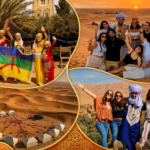
In Morocco, music and dancing are the heartbeat of daily life; you can hear it in the markets, celebrations, and even in the desert wind. It is more than entertainment; it is a reflection of Moroccan identity and traditions.
From the energetic Ahidous of the Middle Atlas to the powerful Ahwash of the south and the spiritual Gnawa rhythms from the Sahara, Morocco’s dances and music connect people through joy, storytelling, and community. These performances are living symbols of Morocco’s rich culture, blending Berber, Arab, and African influences passed down for centuries.
Whether it is at a wedding, a festival, or a village gathering, music and dance remain an essential part of Moroccan life, showing the spirit and unity of its people.
History of Moroccan Music and Dances
Moroccan music and dance have deep roots that go back many centuries. They reflect the country’s diverse mix of Berber, Arab, Andalusian, and African influences. When the Arabs arrived in North Africa in the 7th century, they brought new instruments, rhythms, and poetic forms that blended with the local Berber and Sub-Saharan traditions. Later, when Muslims and Jews fled Al-Andalus (southern Spain) around the 15th century, they brought Andalusian music, a refined and poetic style that remains an important part of Moroccan heritage today.
Over the years, these different cultures shaped Morocco’s musical identity, creating a wide range of sounds and dances. From the powerful Ahwash and Ahidous performed in Berber villages, to the spiritual Gnawa music that carries African roots, and the poetic Malhun songs of urban centers.
Top 15 Music and Dances of Morocco
1. Ahidous Dance And Music
Ahidous is an ancient Amazigh dance and music that is performed in a line or circle by both men and women, capturing the spirit of Morocco’s Berber-rich cultural heritage. It originated in the Middle Atlas mountains and Jbel Saghro, with different clothing worn by men and women to symbolize their connection to each other. Men wear white jallabas with hoods and turbans tied on their heads, while women dress in traditional attire adorned with jewelry. The Agnza/Tallount drumming instrument is held by the men as they sing poems, which are repeated by the women. The lyrics are often about love, hope, bridegroom, wishes, and more. Ahidous continues to be a popular form of entertainment at Moroccan weddings today.

2. Ghiata Dance And Music
The Ghiata Dance is a spectacular display of strength and power, as the dancers move in unison while holding their rifles aloft. Accompanied by only a simple reed flute, the men shout rhythmically and stomp their feet, adding to the intensity of the performance. The choreography includes war-like moves, such as pretend shooting, which demonstrate bravery and courage for those going off to battle. This traditional dance has been kept alive over time, with its climax involving all dancers shooting blanks from their rifles at the ground simultaneously. This dramatic finale serves as a reminder of how deeply rooted this tradition is in Moroccan culture.

3. Ahwach Dance And Music
Ahwach is a unique expression of the Amazigh culture, conveying both joy and strength as people move in unison to the sounds of drums and reed flutes. It is customary in Morocco for weddings to feature Ahwach as the main event, with everyone eagerly awaiting their turn to join in on the festivities. This traditional dance celebrates community spirit while also embracing individual expression, which can be seen through its:
- Unique combination of percussive music and chanting
- Colorful costumes that are incorporated into the movement
- Joyous energy that radiates from both men and women alike.

The impact of Ahwach on Moroccan culture has grown significantly over the past decades, appearing at many festivals around the country. Its expressions have been an inspiration to all who witness it, leaving audiences feeling a sense of liberation that transcends any language barrier.
4. Guedra Dance And Music
Guedra is one of the most emotional and spiritual dances in southern Morocco. It comes from the Tuareg Berber tribes who live near the Sahara. The dance is known for its beautiful costumes, slow movements, and deep meaning.
It usually begins with a group of women sitting or kneeling in a circle, clapping and singing traditional chants. One woman steps into the middle, covered with a light veil. She moves her hands, shoulders, and head in a calm rhythm to the beat of the drum. Most of the dance is done while kneeling, showing peace and connection with the earth. As the song continues, she slowly removes her veil, ending the dance by leaning back in a graceful and powerful gesture.

5. Gnaoua Dance And Music
Gnaoua, sometimes written as Gnawa, is one of the most powerful and spiritual music traditions in Morocco. It comes from communities of Sub-Saharan origin who settled in Morocco centuries ago, blending African rhythms with Islamic and Berber influences.
A Gnaoua performance is both music and ritual. It usually begins with deep drum beats and the metallic sound of Qraqeb (metal castanets), joined by the steady rhythm of the Guembri, a three-stringed lute that gives Gnaoua its heartbeat. Dancers move in a hypnotic rhythm, sometimes leaping or spinning in a trance-like state that reflects both energy and devotion.
Today, you can experience it in cities like Khamlia and Essaouira, especially during the Gnaoua World Music Festival, where the tradition continues to inspire new generations.

6. Taskiwin Dance And Music
Taskiwin is one of Morocco’s oldest traditional dances, originating from the western High Atlas Mountains. It is a powerful and rhythmic dance that reflects strength, pride, and community spirit. Recognized by UNESCO as Intangible Cultural Heritage, it remains a proud symbol of Amazigh (Berber) identity.
In this dance, men wear traditional outfits and carry a small horn called the tiskt, which they shake in rhythm with the music of flutes and tambourines. The movements are energetic and coordinated, with dancers forming lines or circles that show unity and harmony.
In the past, Taskiwin was an important way for young people to gather and celebrate during festivals. Today, it faces challenges as fewer young people continue the tradition. Still, many mountain communities are making great efforts to keep Taskiwin alive — by passing it down through local celebrations and teaching the craft of making its instruments.

7. Rokba Dance And Music
Rokba is an ancient Saharan dance that has been kept alive for centuries in villages of southern Morocco, especially around the Draa Valley (Zagora).
In a typical performance, both men and women take part. The group forms a line or semicircle, clapping their hands, playing drums, and singing in harmony. A leader stands in front, guiding the rhythm and leading the chants, while others follow his movements. The energy and sound build up to create a powerful and joyful scene that captures the spirit of the desert.
Rokba was once performed as a form of celebration and unity during wartime and tribal gatherings. Today, it remains an important part of weddings, local festivals, and music events.

8. Shikhat Dance And Music
Shikhat is one of the most famous dances in Morocco. It is performed mostly by women, known as shikhat, who express emotions through graceful yet powerful movements. The dance often happens during weddings, festivals, and family celebrations, bringing energy and joy to the crowd.
The music that accompanies the dance features drums, tambourines, and hand-clapping, creating a lively rhythm that invites everyone to join. The performers move their shoulders, hips, and hands in sync with the beat, celebrating happiness and freedom.
In the past, the shikhat were respected entertainers, known for singing about love, daily life, and social themes. Today, the Shikhat dance remains a symbol of Moroccan femininity, strength.

The music accompanying Shikhat is based on Shaabi music or Atlas music, which includes drums, violins, and Lotar instruments. The combination creates a unique soundscape that adds to the alluring atmosphere created by these performances. As with other Moroccan dances and music forms like Rokba, Shikhat is part of the region’s intangible heritage that must be preserved if it is not to be lost forever.
9. Houara Dance And Music
The Houara dance from Inezgane is a unique tradition that reflects the soul of Berber culture. This mixed-gender dance features a circle of men clapping and singing rhythmically, while one woman joins toward the end to complete the performance. Every movement and rhythm in this dance has deep spiritual roots, showing harmony, respect, and connection within the community.
The music that accompanies Houara is just as important as the dance itself. Drums and hand-clapping set the tempo for the performers, creating a strong bond between rhythm and motion. The result is a joyful and powerful atmosphere that fills the space with energy and emotion.

10. Boughanim Dance And Music
Boghanim is an ancient Berber music form in Morocco, found primarily in the Aït Bouguemez Valley and its surrounding areas. It has been a source of joy for many generations at weddings and other celebratory events:
- Instrumentation: Boghanim uses traditional instruments such as drums & flutes, which are played by skilled musicians who often have many years of experience.
- Drums: The drummers use different rhythms and sounds to create an upbeat atmosphere that encourages people to dance.
- Flute: The person playing the flute is known as Talount; they play along with the drummers while creating their own unique sound.

Boghanim is quickly becoming endangered due to a lack of practice or teaching among new generations; however, this does not diminish its value as a cultural treasure within Moroccan culture.
11. Sufi Music
Sufi music in Morocco is a spiritual form of art that touches both the heart and soul. It is deeply rooted in Islamic mysticism, where music is seen as a way to connect with the divine. Over the centuries, this music has developed into a powerful expression of peace, reflection, and devotion.
During Sufi ceremonies, participants gather to chant, sing, and sometimes dance in rhythm, creating a space filled with energy and emotion. The main instrument used is the ney, a flute-like wind instrument, along with drums, string instruments, and other percussion that build a calm, meditative atmosphere.

This musical experience allows followers to reach a higher realm of understanding while clearing away anxieties or troubles that may have been plaguing them previously. As such, Sufi music serves as a source of healing for both body and soul.
12. Mulhun Music
Malhun, also known as Melhoun, is one of Morocco’s most poetic and expressive traditional music styles. It blends local folk sounds with poetic lyrics that tell stories about love, wisdom, and daily life.
This art form is performed using instruments such as the oud (a stringed lute), qanun (a zither-like instrument), tambourine, and castanets, creating a rich and rhythmic sound. What makes Malhun special is its storytelling; every song delivers deep messages through melody and poetry.
The skillful manipulation of these instruments creates an emotional response from the audience that ranges from joy to contemplation. As one listens to Mulhun music, their soul is filled with:
- A sense of freedom
- An appreciation for the beauty of Moroccan culture
- A celebration of traditional values
- An optimistic outlook on life.

13. Chaabi Music And Dance
Chaabi, meaning “popular” in Arabic, is one of the most loved traditional music styles in Morocco. It began in the streets, markets, and local celebrations, but today you can hear it everywhere, from weddings and cafés to festivals across the country.
This type blends Arab, Berber, and African rhythms with touches of modern pop, reggae, and Gnaoua influences, creating upbeat melodies that make people want to dance. Chaabi songs often talk about love, daily life, and social themes, making them relatable for everyone.

14. Ouais Dance And Music
The Ouais Dance is one of Morocco’s most elegant traditional performances. It combines the grace of movement with the rhythm of classical Arabic music, creating a truly charming show often seen at weddings and celebrations.
Dancers wear beautifully embroidered kaftans tied with silk belts and play small copper cymbals on their fingers, adding a soft, jingling sound to their steps. The music is performed with a one-string fiddle, a few mandolins, and a musician who strikes a large piece of iron to keep the rhythm steady.
15. Reggada Dance And Music
Reggada used to be a Moroccan dance and Music to show victory over an enemy or opponent. The dancers are led by a leader that they call “Sheikh” who plays music with Moroccan and other traditional North African instruments while the rest of the dancers move their shoulders and hit the ground with a stick to the beat of the drums.