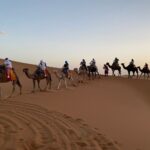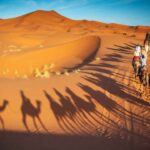
Merzouga is the gateway to the Sahara Desert of Morocco and one of the country’s most magical destinations. Known for the towering golden dunes of Erg Chebbi, it is the best place in Morocco for camel trekking and overnight stays in desert camps. Spending one night here is an experience travelers often call the highlight of their trip to Morocco.
Located in the far southeast of Morocco, Merzouga is a little distance from the main cities, such as Marrakech, Fes, or Casablanca. Yet, the journey is part of the adventure. On the way, travelers pass through beautiful valleys, mountain passes, kasbahs, and traditional Berber villages that make the trip just as rewarding as the destination itself.
The fastest way to reach Merzouga is by flying into Errachidia’s Moulay Ali Cherif Airport, only about 2 hours away. From there, you can take private transfers, shared rides, or public buses to Merzouga. Alternatively, you can join guided tours from Ouarzazate, Marrakech, Fes, or Casablanca, which not only cover transport but also include sightseeing along the way.
How to Get to Merzouga Desert

Nearest Airports to Merzouga Desert
- Moulay Ali Cherif (Errachidia): Only 2 hours from Merzouga.
- Ouarzazate Airport: 5 hours from Merzouga Desert.
Read more: nearest airports to Merzouga desert.
Getting Merzouga from Fes
Going from Fes to Merzouga is an exciting trip, given the various stops you can make along the way. The drive from Fes to Merzouga usually takes around 7 hours, covering around 460 km/286 Miles.
Here are the most common ways to get from Fes to Merzouga:
- Join Private or shared desert tours from Fes.
- Take the Public bus: leave Fes early in the morning and get to Merzouga by evening.
- Take Shared Grand Taxis: this includes changing taxis between major cities like Midelt, Errachidia, and Erfoud.
- Car rental.
Getting Merzouga from Marrakech
Travelling from Marrakech to Merzouga can be a long drive, especially inland. Usually, people take two days and stop halfway to break the distance, either in Ouarzazate, Boumalne Dades, or Tinghir. A straight drive from Marrakech to Merzouga takes around 9-10 hours, covering around 555 km/345.
Here are the most common ways to get from Marrakech to Merzouga:
- Flight: taking a flight from Marrakech to Errachidia is the fastest way to get to Merzouga. However, flights can be limited to a few days of the week.
- Shared or Private Marrakech Desert Tour.
- Public bus: the bus from Marrakech to Merzouga takes around 12 hours, with stops on the way to drop off or pick up passengers.
- Shared Grand Taxis: if you are willing to go straight to Merzouga desert, you have to start early in the morning. The route goes as follows: Marrakech > Ouarzazate > Tinghir > Errachidia > Erfoud > Rissani or straight to Merzouga (Taxis limited).
- Car rental.
Getting Merzouga from Casablanca
If you are in Casablanca and want to get to the Merzouga desert, we recommend taking a flight to Moulay Ali Cherif in Errachidia. For other options, you can take the train or shared Taxis to either Marrakech or Fes. For a stress-free experience, you can check some of the popular Casablanca desert tours.
Discovering Merzouga: An Overview
Location and Significance of Merzouga
The Merzouga desert is on the edge of the vast Sahara Desert. It is the entrance to the Sahara Desert. It is the perfect place to start an amazing desert tour and activities like Camel Trekking and Camping.
From here, you can take a dromedary ride through the desert and see some of the most beautiful desert scenery. You can ride camels through the golden dunes, camp out under the stars, and learn about the traditional culture of the Berber people who live there. Most people include one night, camel trekking, and camping; however, if you have more time, it is worth spending at least two nights. With this in mind, you can benefit from another day to explore the desert on an off-road trip, visit the nomads, the Gnawa people, the Mascara mines, and Hassilabied Oases.
Merzouga Desert Temperatures All Year Round
| Months | Day Temperature | Night Temperature |
|---|---|---|
| December – February | 15–22 °C / 59–72 °F | 2–7 °C / 35–45 °F |
| March – May | 20–28 °C / 68–82 °F | 8–15 °C / 46–59 °F |
| June – August | 35–45 °C / 95–113 °F | 20–26 °C / 68–79 °F |
| September – November | 22–30 °C / 72–86 °F | 9–17 °C / 48–63 °F |
Trip Planning Essentials for Merzouga
When you are planning your trip to Merzouga, you need to make sure you have time to explore the dunes. To get the most out of your time in this desert paradise, make sure you bring sunscreen, sunglasses, hats, comfortable shoes, and light clothes that can handle the heat or the severe cold nights.
You can book a tour with a guide or hire a driver who lives in the area and knows how to navigate the desert. That way, you will not have to worry about anything, and you can make the most of your time visiting Merzouga’s dunes. Check out options for Touring in Morocco!
Best things to do when getting to Merzouga

Overnight Camel trekking and Camping in Merzouga
Experience the culture of the Berber people by spending the night in a traditional tent. Spend the night in the desert, under the stars, while listening to local music. Before you continue your desert adventure, get up early and watch the beautiful sunrise over the golden dunes, which will paint the sky with orange and pink shades. Check out this all-inclusive overnight camel trekking in Merzouga.
Camel Trekking and Sandboarding
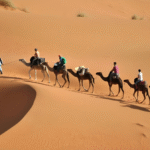
Camel trekking is one of the must-do activities in the Merzouga Desert. Riding a camel across the golden dunes of Erg Chebbi feels like stepping back in time, just as Berber nomads once traveled through the Sahara. You can choose to ride camels to watch the sunrise or sunset, or if you have limited time, take a shorter trek into the dunes and stop midway to enjoy the peaceful views and take photos.
Alongside the camel ride, you can try sandboarding, a fun activity where you slide down the dunes on a board, just like snowboarding, but on sand. It is safe, easy, and a favorite among both adults and kids. Camel trekking gives you the authentic desert feel, while sandboarding adds an adventurous twist to your Sahara experience.
4×4 Offroad Desert Excursions
If you have a full day in Merzouga, taking a 4×4 excursion across the desert is a must. Driving over the dunes lets you discover hidden corners of the Sahara that most travelers miss, turning your visit into a complete experience.
Your adventure often starts in Khamlia, a village known for its Gnawa community. Here, you can enjoy live Gnawa music and spiritual dances that reflect their Sub-Saharan heritage. After that, continue toward the area of M’Ifiss mines, where the French once extracted mascara and barite, and visit the first village in Merzouga.
Next, you will head to meet the Berber nomads, the indigenous people of the desert. Living in traditional tents, they will welcome you with tea and stories about their simple lifestyle and how they manage to survive in such a harsh climate.
In the afternoon, explore the oasis of Hassilabied, where you can see traditional irrigation systems and learn how locals grow crops in the middle of the desert.
Finally, return to your hotel and relax by the swimming pool, a perfect way to end a day filled with desert discoveries.
ATVs or Buggies
If you are looking for an adrenaline-filled adventure in the desert, riding ATVs (quads) or buggies is one of the best choices. After camel trekking and camping, this activity is the most exciting way to explore the golden dunes of Merzouga.
With a quad or buggy, you can go deeper into the desert and reach isolated spots that most travelers cannot access on foot or by camel. The ride lets you feel the thrill of speed while surrounded by endless sand dunes. Along the way, you will stop to enjoy the panoramic views, take pictures, and feel the peaceful silence of the Sahara.
This activity is perfect for those who want both adventure and discovery, giving you a whole new perspective of the Merzouga desert.
Organized Tours vs Independent Travel in Merzouga

Benefits of an Organized Tour
Taking a planned tour in Merzouga can be a good idea for people who want to have a relaxing and educational time. These tours plan everything you need for your trip, from transportation to lodging to activities. By going on a planned tour, you can just sit back and relax while the experts take care of the details.
Contact us to book your trip to Merzouga
Tips for Independent Travelers in Merzouga
If you like to travel on your own, there are a few things you should keep in mind while you are in Merzouga. Know what you want to do and plan if you want to get the most out of your time in this desert paradise. Learn about the local norms and manners so that you can treat people with care while you are there.
If you are going to Merzouga by yourself, you need to be ready for the weather to change. The weather in the desert can be very extreme, with very hot days and very cold nights, and sometimes strong sandstorms. Make sure you bring the right pieces of clothing to keep you relaxed all day and night.
It is important to put safety first on your trip, even though going on your own gives you more freedom and flexibility. Tell someone what you are going to do and make sure you bring important things with you, like water, sunscreen, and a plan.
Dress Code and Packing List for the Sahara Desert
What to Wear in Merzouga
When you visit Merzouga and the Sahara Desert, it is important to dress properly for the tough desert conditions. Days are hot and sunny, while evenings can be cold. Wearing the right clothes and accessories will help you stay comfortable and safe during your trip.
Here is what you should pack and wear:
- Optional layer for evenings: A light jacket or sweater, as desert nights can get surprisingly cool.
- Light, breathable clothing: Choose cotton or linen outfits that keep you cool and allow air to circulate. Loose-fitting clothes are best for comfort and movement.
- Head covering: A wide hat or scarf (like a Moroccan turban) will protect your head, face, and neck from the strong desert sun.
- Sunglasses: Essential to protect your eyes from UV rays and the bright reflection off the dunes.
- Sunscreen: Apply generously on all exposed skin to avoid sunburn.
- Sturdy shoes: Closed-toe shoes with strong soles are ideal for walking on sand and rocky terrain. Avoid flip-flops or sandals for long distances.
Discover more: What to wear in Morocco.