The Sahara Desert is not just a dry and empty land. It is full of history, life, and hidden wonders. Imagine that thousands of years ago, this vast desert was green and full of life: forests, rivers, lakes, and animals.
Today, you can still find ancient fossils in the Sahara showing us that the desert once had dinosaurs, fish, and plants. These fossils are like open books, telling the story of how the climate has changed over millions of years.
Even now, the Sahara is alive and always changing. Some plants and animals have learned how to survive in the tough conditions. From small desert foxes to special plants that store water, nature has found amazing ways to adapt.
What does the word Sahara Mean?
The word Sahara comes from the Arabic word “Saḥra”, which means “desert.” Moreover, Ashar is an Arabic word that means “desert-like,” which is linked to the name. Ashar also means a reddish color, which is a great way to describe the vast areas of reddish sand that you can see all over the Sahara.
How Hot Is The Sahara Desert?
With one of the toughest temperatures, the Sahara is the world’s hottest desert. The highest temperature ever measured was 57.8°C (136°F) in El Azizia, Libya, and the average temperature for the year is 30°C. It does not rain much in this area. In fact, every year, less than 1 inch of rain falls in half of the Sahara Desert.
Many people think that the Sahara is always hot, but during winter nights, with no humidity, the temperatures drop considerably and can hit as below 0°C. The coldest temperature ever measured in the Sahara Desert was -10.8°C (12.6°F) in Arak, Algeria.
How Big Is The Sahara Desert?

The Sahara Desert is a huge and amazing place, covering 9.2 million square kilometers, which is as big as China. When exploring the Sahara, you will see that it is not just a vast, harsh land; the wildlife, the weather, and even the scenery are all very different from one place to another.
What Can Be Found In The Sahara Desert?
The Sahara Desert is not just sand. Most of it is made up of salt flats, Golden dunes, mountains, dry valleys, Oases, as well as empty, rocky plateaus with black volcanic rocks. Only the River Nile flows all year through the Sahara. All the other rivers and streams are seasonal.
The Sahara Desert has more than 20 lakes, and most of them are saltwater lakes. Lake Chad is the only lake with fresh water in the Sahara.
Emi Koussi (3,415m), a volcano in the Tibesti Mountains in Chad, is the highest point of the Sahara Desert.
Read: Animals of the Sahara Desert.
How big are the sand dunes in the Sahara Desert?
The world’s largest sand dunes are located in the east-central part of Algeria, the Isarene-n-Tifernine Sand Sea, some of which are up to 450 meters high.
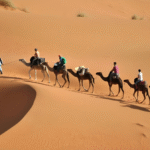
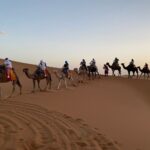
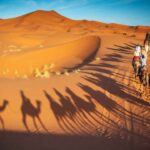
Some of the dunes in the Erg Chebbi in Merzouga are as high as 200 meters, making them the biggest in Morocco. They are perfect for outdoor activities such as camel riding, quad biking, and camping at desert camps.
Has The Sahara Desert Changed Over the Years?
A lot of people think that the huge dunes have been there forever. This huge area was not always a dry, sandy desert. About 5,000 years ago, the Sahara was full of animals and green plants. The Earth’s tilt moved a little, which caused a big change in the climate.
There is more than just sand in the Sahara Desert now. Rocks and huge sand seas are among the different types of land. Scientists believe that the Sahara could change again in the future, and it could turn green again.
Do People Live In The Sahara?

About 2.5 million people live in the Sahara Desert: Berbers (including the Tuareg), Arabs (including the Bedouins and Sahrawi), and various other indigenous groups like the Teda. They have adapted incredibly well to the harsh living conditions. Many of them live a nomadic life, moving around with the seasons to find water and food for their animals.
In the Sahara, communities are small and distributed all over. People who decide to stay in one place usually live near important water sources. Living in the Sahara requires a lot of patience and intelligence. For example, the way they build their homes and their community traditions help them survive in such a challenging environment.